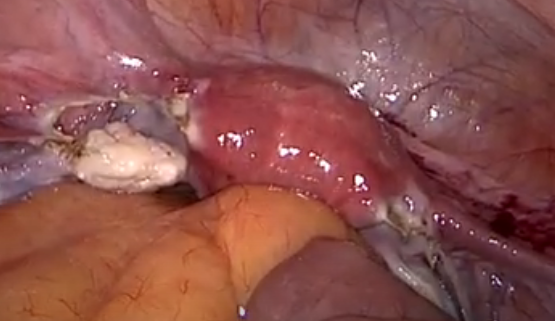
Explanation procedure OS
In the example video, in which OS was performed during a gastric bypass surgery, no additional incisions were made to access the fallopian tubes. The patient is positioned in full Trendelenburg. The fallopian tubes can be removed using a Ligasure device, or with monopolar or bipolar scissors.
The surgical step-by-step plan below proceeds from left to right.
Step 1:
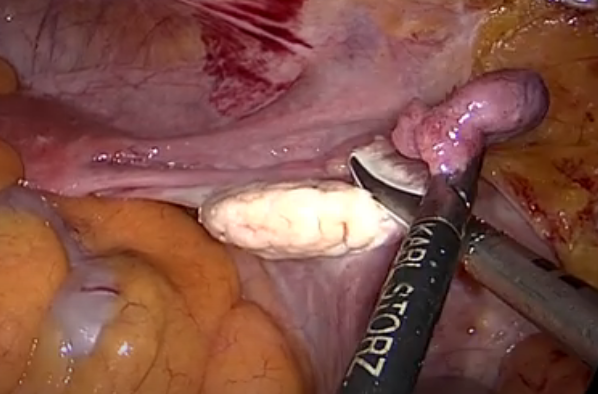
Accessing the pelvic cavity. The fallopian tube is grasped and lifted upwards. The white ovary is visible.
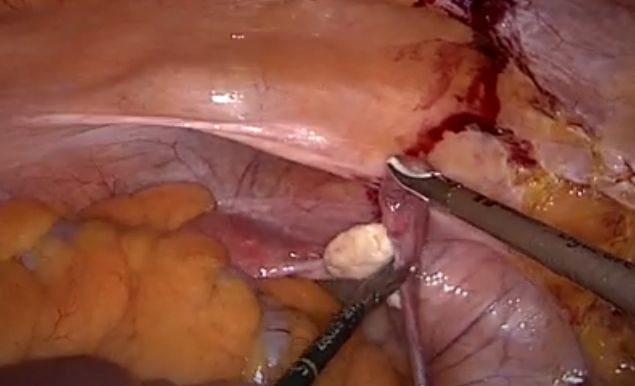
The majority of tubo-ovarian carcinomas originate in the fimbrial end of the fallopian tube.
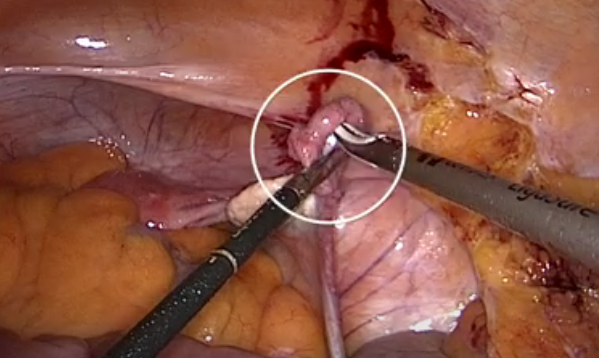
The infundibulum pelvicum contains the ovarian vein and artery, which are important for the blood supply to the ovary. During the surgery, it is therefore essential to leave these structures intact.
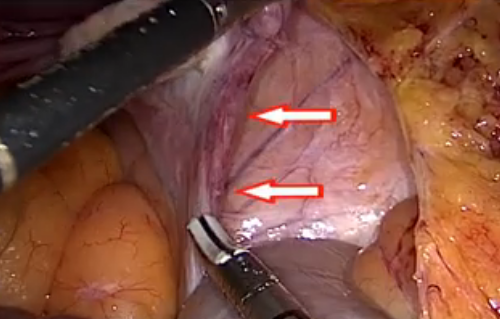
Step 2:
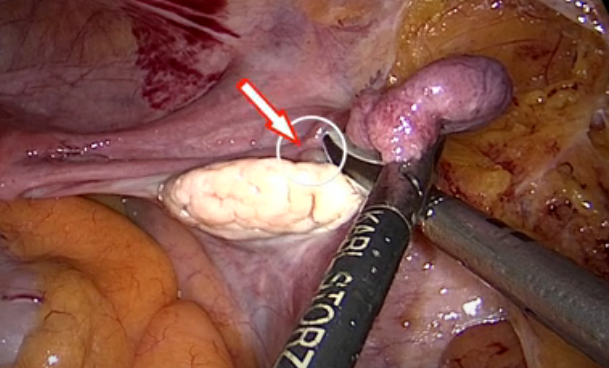
The fallopian tube is transected at the level of the ovary. It is coagulated twice due to the presence of larger blood vessels.
A paratubal cyst also contains tubal epithelium and should therefore be removed as well.
There is also a vessel here that must be preserved, as it supplies blood to the ovary from the uterus.
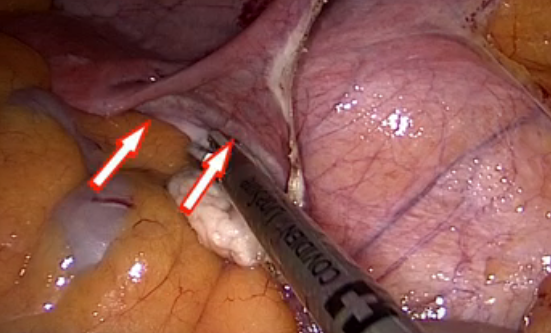
Step 3:
The paratubal tissue is removed as close to the fallopian tube as possible to avoid damaging the blood vessels.
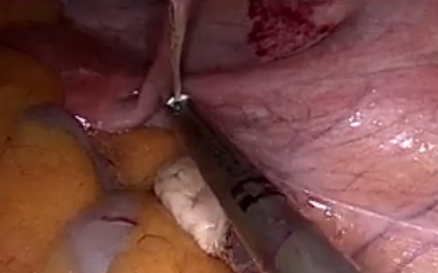
Step 4:
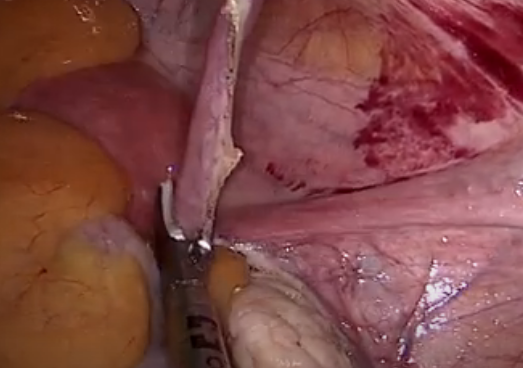
The fallopian tube is transected near the uterus, after which it is removed ex vivo.
Step 5:
A portion of the fallopian tube is also located within the uterus. This part is destroyed using coagulation.

Step 6:
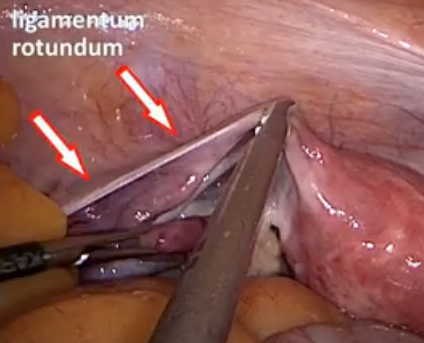
After mobilizing the descending colon and sigmoid colon, the other fallopian tube comes into view. The round ligament (ligamentum rotundum) should not be mistaken for the fallopian tube. This ligament helps to keep the uterus in the abdominal cavity.
Step 7:
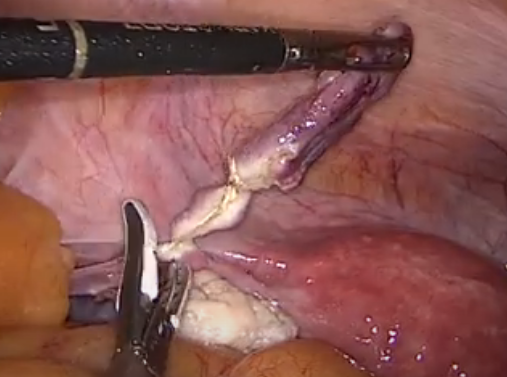
The second fallopian tube is removed following the same step-by-step procedure as before, with the paratubal tissue being removed as close to the tube as possible.
Step 8:
The second fallopian tube is removed ex vivo. The fimbrial end, which is indicated here, is the most important part because this is where the premalignant lesions of tubo-ovarian carcinoma are found.
Step 9:
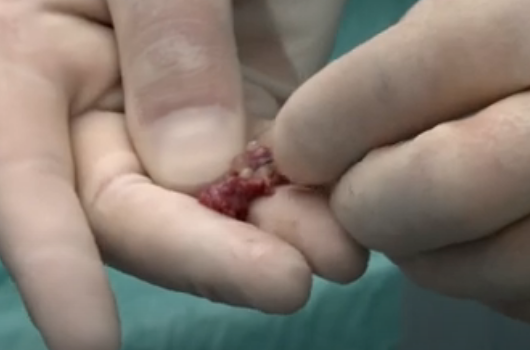
Final check. Both fallopian tubes have been removed, and the ovaries have been left in situ.